
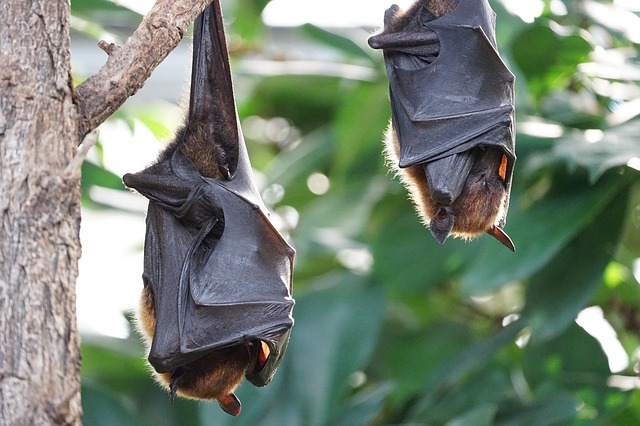
The Nipah Viral infection (NiV) is caused by the deadly RNA virus Nipah which belongs to the genus Henipavirus. This virus is easily transmitted from its carrier or host, the fruit bats to the susceptible mammals like humans and pigs. As the virus is carried by the fruit bats, it doesn’t harm their body. But when a mammal gets in touch with the bat's saliva or urine, the virus gets easily transmitted into the body causing some serious infections.
Natural host of Nipah Virus and its family:
The primary host of Nipah Virus is fruit bats or the flying foxes. Fruit bats, or as the name depicts, the bats who eat fruits generally belong to the Pteropodidae family and Pteropus Genus. Nipah is a newly emerging virus which causes infection in both humans and other mammals. Fruit bats carry the virus in their body and when they come into direct contact with mammals, the virus readily transmitted into their body. It’s stated by researchers that the bat’s saliva and urine are most probably the cause of the breakthrough of the virus. It’s also been stated that sometimes pigs can behave as the intermediate host.
The first breakthrough of Nipah Virus:
According to the WHO, Nipah Virus was first time identified in a small village of Malaysia in 1998. From the name of the village Kampung Sungai Nipah, the deadly RNA virus was named as Nipah. That time around 265 cases of Nipah infection along with 105 deaths was spotted in Malaysia. The infections and its symptoms were mostly identified in pigs and pig-farmers body.
After this in 2001, the Nipah Virus outbreak was again started in Bangladesh and Siliguri. In 2003, 2004, and 2005 there were frequent outbreaks in Bangladesh and it’s reviewed by the research team that the outbreak was caused due to consumption of date palm sap which was actually contaminated by fruit bats’ infected saliva or urine.
Nipah Virus symptoms:
After getting in contact with the virus, the symptoms take time to appear. Within three to fourteen days of the contamination, the Nipah patient starts to feel a headache, fever, vomiting tendency, drowsiness, mental illness, and disorientation etc. In case of higher negligence, the patient can also go into the coma within one day. Encephalitis, brain inflammation and breathing problems, these are the main symptoms of NiV.
It’s stated by Doctors, that the patient who has a breathing problem or has asthma and that kind of respiratory troubles are more prone to transmit the virus than the patients who have no respiratory diseases.
Precautions:
First thing first to avoid any kind of connection with exposure to pigs and bats. It’s a proven fact that bats generally drink from the open containers which contain toddy and also urinate in them. So it would be wise to avoid drinking raw date palm sap and also to avoid eating half-eaten, uncovered, and uncleaned fruits from the market. As it’s stated that the virus is contaminated easily, so you must avoid contact with the person who is likely to have those upper mentioned symptoms.
The risks of getting transmission are very higher in case of doctors, nurses, hospital caretakers and family members of the patient. In Bangladesh, Malaysia and now in Kerala, lots of Nipah Virus infected cases have been identified to people who are in direct contact with Nipah-patient. So it is very important to wear NH-95 grade and higher masks, use antiseptic to clean your households, maintain a proper hygiene code to your family and also wash hands every time you want to eat or drink something.
Laboratory Diagnosis:
In case of a Nipah patient, diagnosis can be done in three stages. The most important point to remember is the diagnosis can only be done when the patient is in the acute or convalescent phase. After assuring the phase the first stage of virus isolation attempts should be done. When this stage is going the Real-Time Polymerase Chain Reaction (RT-PCR) should be done from cerebrospinal fluid, urine, blood, and throat to nasal swabs. After this tastes, ELISA for antibody detection and in some complicated cases Immunohistochemistry on tissues should also be done to detect the antibody.
Treatments:
As of now, there are no effective treatment, drugs or vaccine are present for NiV. Only intensive care, bed rest, exact nursing and standard infection control practices should be done on the patient. The patient who possesses respiratory trouble mostly tends to grow infectious climate, so they should be given intensive support care twenty-four hours a day. Patients who are having NiV, are generally expected to show good result and full recovery from the acute Encephalitis. But it’s been observed that in some cases, the patients are showing mental illness, disorientation, drowsiness, behavioral changes etc.
Recent breakout in Kerala:
Death toll rises to 12, including a nurse who was taking care of the Nipah-patients, in Khozikhode, Kerala. It’s guessed that the virus has been transmitted from fruit bats to the human body, though there is no concrete evidence against it. If the source of the infection could be identified then it would be very easy to spot the exact cause of the infection and also to prevent it. So the Kerala Govt. is taking necessary steps against it to discover the cause of the epidemic outbreak. Though it has been specified by scientists that human-caused facts like rapid climate change, pollution, and deforestation could, in fact, be the cause of habitat-loss of fruit bats, which triggers them, and out of hunger and stress they come near to human locality, and when they excrete or urinate the virus transmitted from their body to mammals. So in a word nutritional stress can excite the bats and can act as the primary cause of the epidemic outbreak of Nipah Virus.

0 Comments